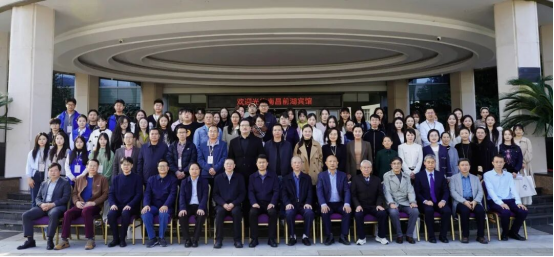
On November 7, the Review Meeting for the 2025 Major Project of the National Social Science Fund of China (Arts), titled “Research on the Construction of Contemporary Chinese Opera Criticism and Discourse System”, along with the Academic Seminar on Chinese Opera Theory Construction in the New Era, was held at Nanchang University (NCU). The event was hosted by NCU and organized by the Office of Social Sciences and the School of Arts. Distinguished attendees at the opening ceremony included Xiao Jian, Deputy Director-General of the Department of Science, Technology and Education of the Ministry of Culture and Tourism; Da Yuqi, Level III Consultant of the same department; Han Zhiyu, Deputy Director-General of the Jiangxi Provincial Department of Culture and Tourism; Yang Pengfei, Director of the Science and Technology Education Division; Chen Beihong, Level II Consultant; as well as Ge Gang and Chen Shifa, Vice Presidents of NCU. The opening ceremony was presided over by Zheng Lu, Dean of the School of Arts.
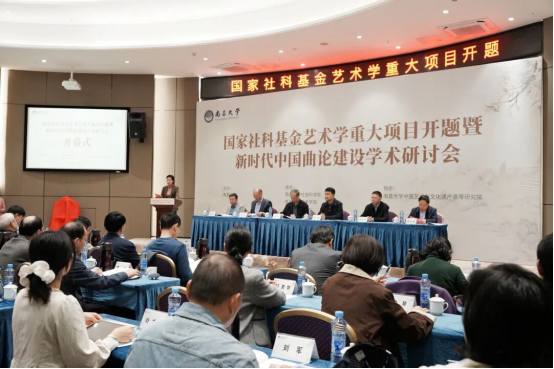
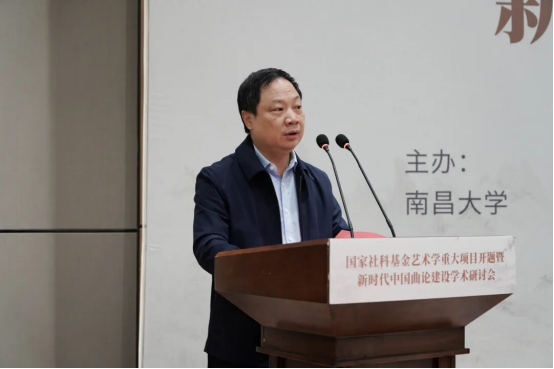
In his remarks, Xiao Jian urged the research team to prioritize three key areas: First, to raise their political stance and strengthen their sense of responsibility; second, to clarify work requirements to ensure the quality of research results; and third, to foster a rigorous academic atmosphere and strictly control the quality of scientific research. He called for efforts to strictly adhere to research norms and ideological principles, and expressed hope that NCU would fulfill its management duties to provide solid support for the project.
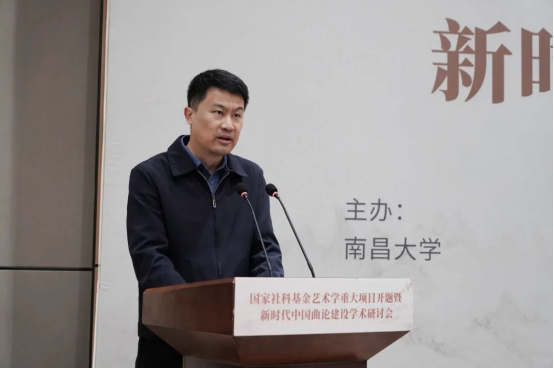
Chen Shifa delivered a welcome address, expressing warm welcome and heartfelt thanks to the leaders and experts present. He stated that the project closely aligns with the goal of building a cultural powerhouse and deeply implements General Secretary Xi Jinping’s important instructions that “Traditional Chinese opera is the treasure of Chinese culture” and “the key to the prosperity and development of the opera lies in people”. He affirmed that NCU will fully support the research of this project and take it as an opportunity to deepen cooperation with scholars at home and abroad, jointly promoting the innovative development of art studies.
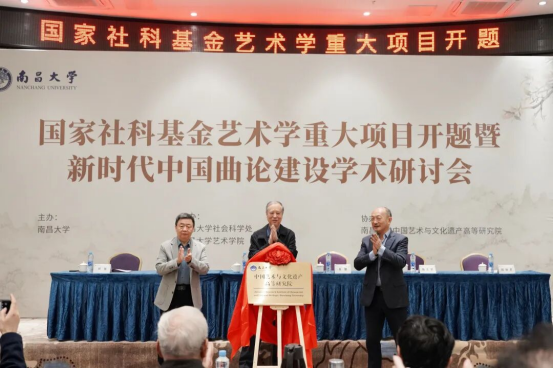
At the opening ceremony, the unveiling ceremony for the Institute of Advanced Studies in Chinese Arts and Cultural Heritage at Nanchang University was held.
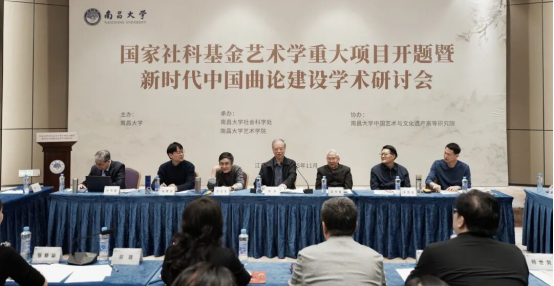
During the review session, the project team presented a special report to the expert review panel. The panel was composed of Liao Ben, former Vice Chairman of the China Federation of Literary and Art Circles (CFLAC), former Vice Chairman of the China Writers Association (CWA), and Research Fellow; Zheng Chuanyin, Professor at the School of Arts, Wuhan University; Li Changji, Professor at the School of Chinese Language and Literature, Jiangsu Normal University; Zhu Hengfu, Professor at the College of Film and Television, Shanghai Normal University; Gu Shuguang, Professor at the School of Chinese Classics, Renmin University of China; Sun Shulei, Professor at the School of Liberal Arts, Nanjing University; and Wang Ning, Professor at the School of Chinese Language and Literature, Soochow University.
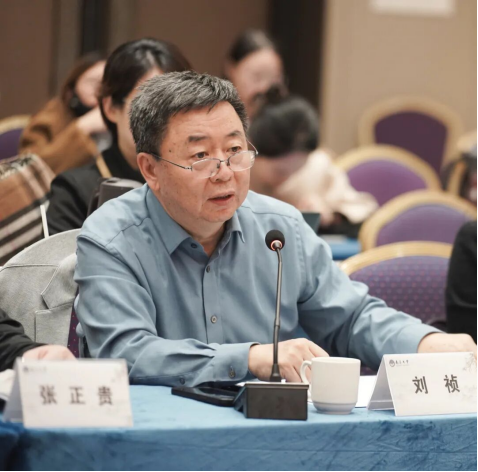
Professor Liu Zhen, the project’s Chief Expert and Distinguished Professor at Nanchang University, made a comprehensive and detailed report on the research plan and implementation scheme, elaborating on the project’s value, research objects, methodology, expected results, key difficulties, and innovative aspects.
The meeting was attended by sub-project leaders including Zhao Tianwei (Professor, School of Arts, Southeast University), Jiang Ji (Professor, School of Liberal Arts, Renmin University of China), Zhang Zhenggui (Researcher Fellow, National Peking Opera Company), Zheng Lu (Professor, School of Arts, Nanchang University), and He Shijian (Professor, School of Arts, Nanchang University). Key project members also attended, including Zhang Tingting (Professor, Shanghai Film Academy, Shanghai University), Li Zhiyuan (Researcher, Institute of Chinese Opera, Chinese National Academy of Arts), Ding Sheng (Professor, Department of Dramatic Literature, Shanghai Theatre Academy), and Xu Fei and Yu Qin (Professors, School of Arts, Nanchang University).
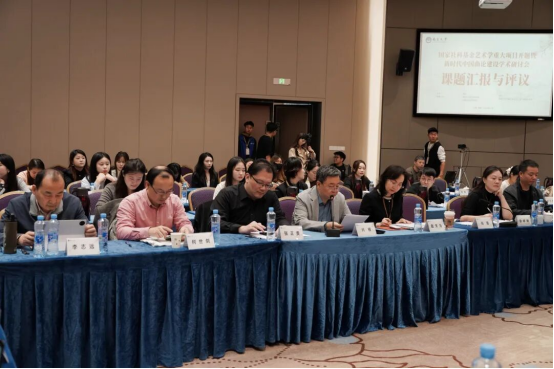
The expert panel deliberated on the opening report and offered constructive suggestions. They hoped the research team would strengthen holistic awareness, ensuring that sub-projects revolve around the core objectives of the general project to achieve synergy and avoid fragmentation. They urged the team to enhance engagement with reality by actively connecting with the actual ecology of Chinese opera, addressing the disconnect between academic theory and specific practices, and bridging structural gaps. The experts also encouraged the Chief Expert and all sub-project leaders to work together to further refine the research design, ensuring the final results are logically rigorous, systematically complete, and possess both academic height and practical relevance, thereby truly realizing the research value and mission of this major project.
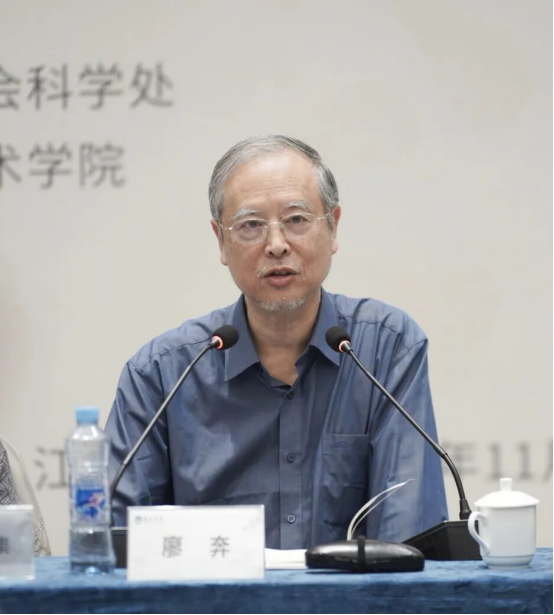
Research Fellow Liao Ben, Chair of the expert review panel, summarized the comments and suggestions from the experts. The panel unanimously agreed that the project features rigorous topic argumentation, a reasonable research plan and team composition, and possesses significant academic value and practical relevance. They agreed to pass the project’s inception report and expressed eager anticipation for fruitful academic and practical achievements.
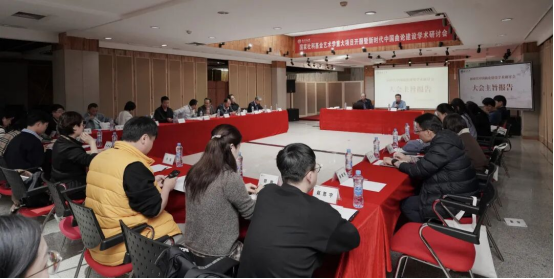
To deepen academic exploration, the Academic Seminar on Chinese Opera Theory Construction in the New Era was also held. Experts and scholars from universities and research institutes—including Renmin University of China, Nanjing University, Southeast University, Wuhan University, Shanghai University, Shanghai Theatre Academy, Soochow University, Changzhou University, Xi'an Conservatory of Music, Anyang Normal University, Nanchang University, the Chinese National Academy of Arts, and the National Peking Opera Company—delivered keynote speeches and engaged in enthusiastic and in-depth discussions centered on Contemporary Chinese Opera Criticism and Discourse System Construction. This session pooled wisdom for the subsequent advancement of the project and laid a solid academic foundation.
The successful holding of this Review Meeting and Academic Seminar marks that the “Research on the Construction of Contemporary Chinese Opera Criticism and Discourse System” project has officially entered the substantive research phase.
.png)